The U.S. trucking industry plays a major role in moving goods across the country, with trucks transporting more than 70% of domestic freight. Behind every successful shipment is a network of drivers, carriers, shippers, brokers, and dispatchers working together to keep freight moving efficiently.
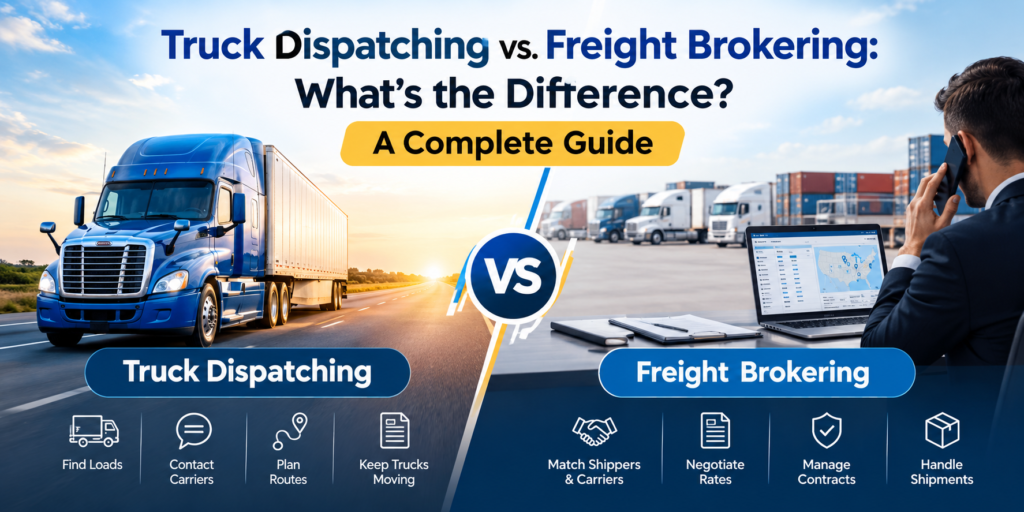
Two important roles in this process are truck dispatching and freight brokering. Although both are connected to freight transportation, they have different responsibilities and work with different parties. A truck dispatcher primarily works with carriers and drivers to find suitable loads, plan routes, communicate with brokers, track shipments, and manage day-to-day transportation operations. A freight broker, on the other hand, acts as a middleman between shippers who have freight and carriers who can transport it.
Understanding the difference between truck dispatching vs. freight brokering is important for anyone considering a career in the trucking and logistics industry. While dispatchers focus on helping carriers and drivers manage their loads and operations, freight brokers focus on connecting shippers with reliable carriers and arranging transportation.
In this guide, we will explain truck dispatching vs. freight brokering, including their roles, responsibilities, daily tasks, earning potential, required skills, and career opportunities. We will also look at the key differences between a truck dispatcher and a freight broker to help you understand which career path may be right for you.
What Is a Truck Dispatcher?
A truck dispatcher is a professional who helps trucking companies, carriers, and owner-operators manage their day-to-day freight operations. Their main job is to help drivers find suitable loads, coordinate with brokers and shippers, plan routes, and keep shipments moving smoothly.
Truck dispatchers work behind the scenes to reduce the administrative workload for drivers and carriers. By handling communication, load coordination, scheduling, and other logistics tasks, dispatchers allow drivers to spend more time focused on the road.
Some of the main responsibilities of a truck dispatcher include:
- Finding and booking loads: Searching load boards, contacting freight brokers, and working with shippers to find suitable freight.
- Assigning loads to drivers: Matching available loads with drivers based on location, equipment, availability, and capacity.
- Planning efficient routes: Choosing practical routes that can help reduce empty miles, delays, and unnecessary fuel costs.
- Monitoring shipments: Tracking drivers and shipments while staying updated about traffic, weather, road conditions, and unexpected delays.
- Communicating with brokers and shippers: Managing calls, emails, load updates, pickup and delivery details, and other important information.
- Managing paperwork: Helping with rate confirmations, bills of lading, delivery documents, records, and other administrative tasks.
- Supporting daily operations: Resolving common issues that may arise during pickup, transit, or delivery and keeping all parties informed.
Truck Dispatcher vs. Freight Broker
One of the key differences between truck dispatching and freight brokering is who they primarily represent. A truck dispatcher generally works on behalf of a carrier or owner-operator, helping them find and manage freight and improve their daily operations.
A freight broker, in comparison, connects shippers that need to move freight with carriers that have the capacity to transport it. Brokers typically negotiate transportation rates and coordinate the shipment between both sides.
In simple terms, truck dispatchers focus on supporting carriers and drivers, while freight brokers focus on connecting shippers with carriers. Both roles are important in the trucking industry, but their responsibilities, business relationships, and career paths are different
How Do Truck Dispatching Services Work?
Truck dispatching services work like an outsourced logistics and operations department for trucking companies, carriers, and independent owner-operators. Instead of handling every part of the freight process themselves, carriers can rely on a dispatcher to find loads, communicate with brokers and shippers, manage schedules, and take care of important administrative tasks.
The main responsibility of a truck dispatcher is to help carriers find and book suitable freight. Dispatchers consider factors such as the truck’s location, equipment type, driver availability, destination, and rate when searching for loads. They also help coordinate pickup and delivery details and keep drivers updated throughout the shipment.
Truck dispatchers commonly use load boards, dispatch software, and Transportation Management Systems (TMS) to search for freight and manage shipments. Platforms such as DAT and Truckstop can help dispatchers identify available loads, compare opportunities, and communicate with brokers. TMS and other logistics software can also help with shipment tracking, scheduling, documentation, and operational updates.
A typical truck dispatching process may include:
- Finding available loads through load boards, brokers, and shipper networks.
- Reviewing load details such as pickup location, destination, equipment requirements, mileage, and rate.
- Negotiating and booking freight with brokers or other freight partners.
- Assigning the load to a suitable driver based on availability and location.
- Planning the route and coordinating pickup and delivery schedules.
- Tracking the shipment and monitoring the driver’s progress.
- Communicating updates with drivers, brokers, shippers, and receivers.
- Managing documents and records related to the shipment.
Dispatchers may also help drivers and carriers stay organized around important operational requirements, including Hours of Service (HOS) rules and other applicable transportation regulations. However, the carrier and driver remain responsible for complying with the regulations that apply to their operations.
By handling these responsibilities, truck dispatching services can reduce administrative workload, minimize downtime, and help carriers keep their trucks moving efficiently. For owner-operators in particular, professional dispatch support can allow them to spend more time driving while the dispatcher manages much of the freight coordination process.
The Benefits of Using a Truck Dispatch Service
For many owner-operators and small trucking companies, managing freight while also handling calls, paperwork, scheduling, and route planning can be challenging. A truck dispatch service can take care of many of these tasks, allowing drivers and carriers to focus more on operating their trucks and delivering freight.
Here are some of the key benefits of working with a professional truck dispatcher:
- Saves time: Instead of spending hours searching load boards and contacting brokers, drivers can focus on driving while the dispatcher handles load sourcing and coordination.
- Better load opportunities: Experienced dispatchers understand freight markets, load rates, lanes, and negotiation. This knowledge can help carriers identify suitable loads and negotiate competitive rates.
- Reduces truck downtime: By searching for the next load in advance and coordinating pickup and delivery schedules, dispatchers can help keep trucks moving and reduce unnecessary waiting time.
- Route and load planning: Dispatchers help coordinate loads and routes based on the truck’s location, equipment, availability, and delivery requirements. Better planning can help reduce empty miles and improve operational efficiency.
- Administrative support: Dispatchers can assist with rate confirmations, load information, shipment updates, documentation, invoicing, and record-keeping, reducing the administrative workload for drivers.
- Communication support: A dispatcher acts as a communication link between drivers, freight brokers, shippers, and receivers, helping ensure that everyone has the latest information about a shipment.
- Compliance awareness: Dispatchers can help organize schedules and operations around applicable transportation requirements, while the carrier and driver remain responsible for complying with regulations.
Is a Truck Dispatch Service Worth It?
Some owner-operators prefer to self-dispatch because they want complete control over their loads and negotiations. Others choose professional dispatch services because they want to spend less time on administrative work and more time focusing on driving and running their business.
The right choice depends on the carrier’s experience, workload, business model, and ability to manage freight operations independently. For growing carriers, a reliable dispatcher can provide valuable operational support without the commitment of hiring a full-time employee.
Understanding these benefits also helps explain an important distinction in the industry: truck dispatchers support carriers and drivers, while freight brokers connect shippers with carriers. The next section looks at how freight brokering works and how it differs from truck dispatching.
The Future of Truck Dispatching
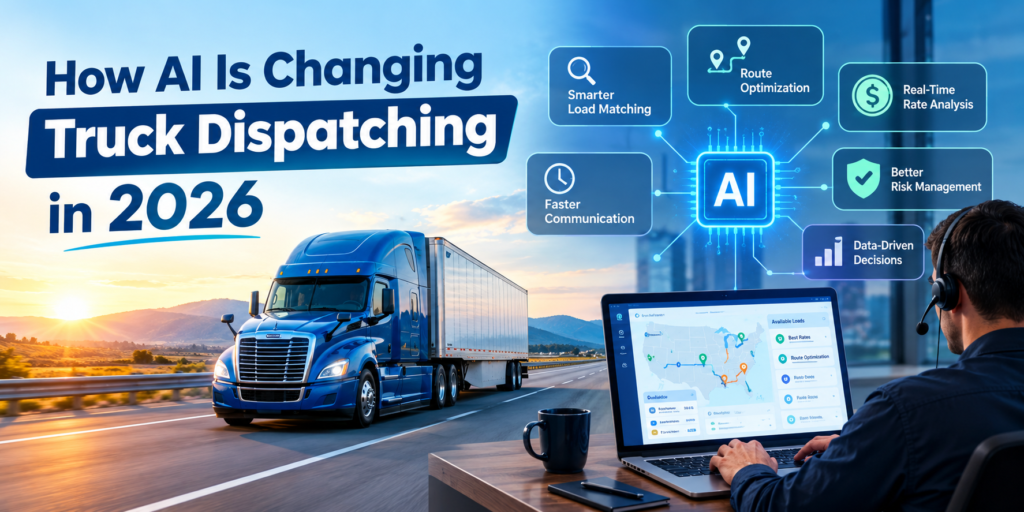
Technology is changing the way truck dispatchers work. AI-powered logistics software, digital load boards, GPS tracking, route optimization tools, and electronic logging devices (ELDs) are helping dispatchers manage loads more efficiently and make faster decisions.
However, technology is not replacing the need for skilled dispatchers. Human decision-making remains important when dealing with changing schedules, driver communication, traffic delays, rate negotiations, and unexpected issues during a shipment.
As the trucking industry continues to evolve, the role of the dispatcher will also change. Modern dispatchers will need to understand both trucking operations and digital tools to help carriers find suitable freight, plan efficient routes, communicate with brokers, and keep shipments moving.
For carriers and drivers, there are several options: they can handle dispatching themselves, hire an in-house dispatcher, or work with an independent dispatch service. The right choice depends on the size of the operation, available resources, and business goals.
Ultimately, effective truck dispatching remains an important part of successful trucking operations. Whether using traditional methods or modern technology, skilled dispatchers help connect drivers with freight, reduce operational challenges, and keep trucks moving efficiently.