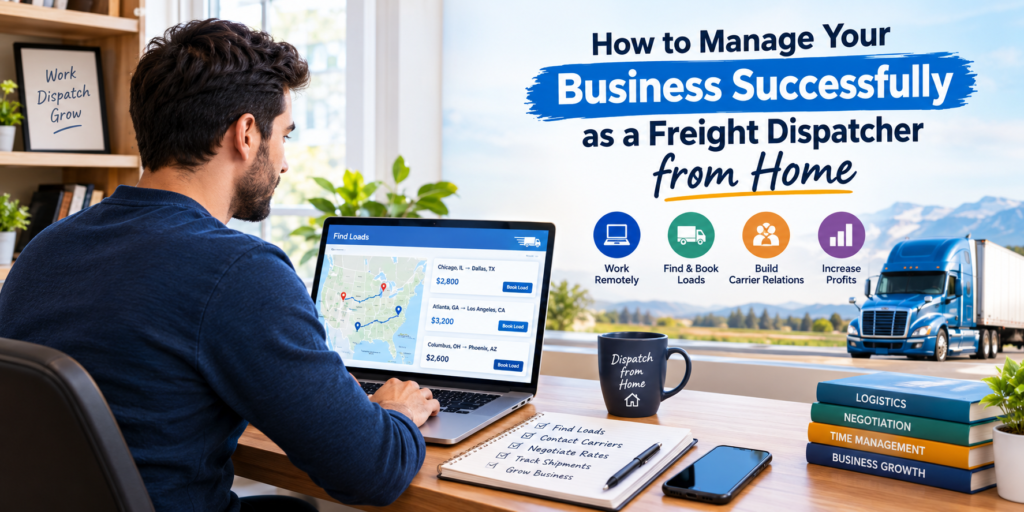
Starting a freight dispatching business from home can be a great opportunity for people who want to work in the trucking and logistics industry. With a computer, a reliable internet connection, and the right skills, you can manage daily dispatching tasks without renting an office.
A freight dispatcher helps truck drivers and owner-operators find suitable loads, communicate with freight brokers, plan routes, and manage shipment schedules. When you work from home, you can handle these responsibilities remotely while building professional relationships with clients across the USA and Canada.
However, running a successful home-based freight dispatching business requires more than just finding loads. You need good communication skills, proper planning, time management, and a clear understanding of the trucking industry.
In this guide, we will explain how to manage your freight dispatching business from home and build a strong foundation for long-term success.
1. Understand How Freight Dispatching Works
Before starting your business, learn how the freight dispatching process works. A freight dispatcher acts as a link between truck drivers, owner-operators, and freight brokers.
Your main responsibilities may include:
- Finding suitable loads through freight load boards.
- Contacting brokers to discuss available shipments.
- Negotiating freight rates on behalf of your clients.
- Planning routes and checking pickup and delivery schedules.
- Coordinating with drivers during transportation.
- Managing rate confirmations, bills of lading, and other shipping documents.
- Following up on deliveries and communicating any delays.
Understanding these tasks will help you manage your daily work more efficiently and provide better service to your clients.
2. Set Up a Professional Home Office
You do not need a large office to start a freight dispatching business. A small, organized workspace can be enough to handle your daily responsibilities.
Make sure you have the following essentials:
- A computer or laptop suitable for daily business tasks.
- A stable, high-speed internet connection.
- A professional email address and business phone number.
- A headset for clear communication with brokers and drivers.
- A comfortable workspace with minimal distractions.
- A backup internet connection or power supply, if possible.
Your home office should help you stay focused and respond quickly to business calls and messages.
SEO tip: Create a professional business website that explains your freight dispatching services, experience, and contact information. This can help potential clients discover your business through search engines.
3. Choose the Right Load Boards and Dispatching Tools
Technology plays an important role in managing a freight dispatching business from home. The right tools help you find loads, organize shipment details, communicate with clients, and reduce manual work.
Common tools used in freight dispatching include:
| Tool or Software | How It Helps |
|---|---|
| Freight load boards | Find available loads that match truck requirements |
| Dispatch management software | Organize loads, drivers, and shipment schedules |
| Route planning tools | Check routes, distances, and estimated travel times |
| Email and business messaging | Communicate with brokers and clients |
| Spreadsheets or CRM software | Track clients, load details, and follow-ups |
| Document management tools | Store and organize shipping documents |
Examples of freight load boards used in the North American trucking industry include DAT and Truckstop. Availability, subscription costs, and access requirements vary by platform.
Choose tools based on your business needs and budget. Before paying for a subscription, understand its features and make sure you are authorized to use it for your intended business activities.
4. Build Strong Relationships with Owner-Operators
Your clients are an important part of your freight dispatching business. Many independent truck drivers and owner-operators need support with finding loads, communicating with brokers, and managing their schedules.
To build strong relationships, focus on understanding each client’s needs.
For example, learn about their truck type, preferred routes, operating area, schedule, and business goals. This information helps you identify loads that fit their requirements.
You should also:
- Communicate clearly and professionally.
- Respond to messages within a reasonable time.
- Share accurate load information.
- Keep clients updated about pickup and delivery schedules.
- Be honest about possible delays or problems.
- Avoid making promises you cannot guarantee.
Trust takes time to build. Consistent communication and reliable service can help you retain clients and earn referrals.
5. Learn How to Find and Negotiate Profitable Loads
Finding suitable loads is one of the most important responsibilities of a freight dispatcher. However, choosing a load based only on its total payment can lead to poor decisions.
Consider the complete picture before recommending a shipment.
Check the pickup and delivery locations, loaded miles, deadhead miles, fuel costs, delivery deadlines, equipment requirements, and the driver’s schedule. A load with a higher gross rate may not be the best option if it involves too many empty miles or an inconvenient route.
When communicating with freight brokers, ask relevant questions and negotiate professionally.
Your goal should be to help your clients make informed business decisions while maintaining good relationships with brokers. Remember that freight rates depend on market conditions, lane demand, equipment availability, and other factors. Higher earnings are never guaranteed.
6. Manage Your Daily Schedule Effectively
Working from home offers flexibility, but it also requires discipline. Without a clear schedule, you may miss important calls, forget follow-ups, or struggle to manage multiple shipments.
Create a daily routine that fits the operating hours of your target market. If you work with US or Canadian trucking companies from India, you may need to adjust your working hours to match their business time zones.
A sample daily routine could look like this:
| Activity | Main Purpose |
|---|---|
| Start of shift | Review messages, available trucks, and pending tasks |
| Load search | Find suitable loads for clients |
| Broker communication | Discuss rates, availability, and shipment details |
| Load confirmation | Verify terms and organize documents |
| Shipment tracking | Monitor progress and communicate updates |
| End-of-shift review | Update records and prepare for the next working day |
This schedule is only an example. Your actual working hours will depend on your clients, their locations, and the type of freight you manage.
7. Keep Your Documents and Business Records Organized
Accurate documentation helps prevent misunderstandings and makes your business easier to manage.
Keep organized records of load offers, agreed rates, broker details, rate confirmations, shipment documents, delivery updates, invoices, and client agreements.
Use clear file names and organize documents by client, truck, load number, or delivery date. You can use secure cloud storage or a suitable document management system to access files when working remotely.
Also, maintain separate records of your business income and expenses. Track software subscriptions, communication costs, marketing expenses, and payments received from clients.
Good recordkeeping makes it easier to review your performance, prepare invoices, and understand whether your business is operating efficiently.
8. Protect Your Business with Clear Agreements
Before working with a new client, explain your services, responsibilities, payment terms, and communication process.
A written agreement can help both parties understand what is expected. It should clearly describe your dispatching services, fees, payment schedule, cancellation terms, and other relevant conditions.
You should also understand the legal requirements that apply to your business and the freight activities you support. Rules may differ depending on the country, state, business structure, and whether you operate as a dispatcher, freight broker, or another type of service provider.
For example, US operations can involve specific regulatory requirements depending on the actual activities performed. Do not assume that calling your business a dispatch service automatically removes licensing or registration obligations. Seek qualified advice when necessary.
9. Find New Clients for Your Home-Based Dispatching Business
A freight dispatcher needs a reliable way to attract new clients. Even if you have excellent dispatching skills, your business may struggle if potential customers cannot find you.
Here are some practical ways to promote your services:
Build a business website: Create pages describing your truck dispatching services, the types of carriers you support, your service process, and your contact details.
Use SEO: Publish helpful articles around search terms such as “freight dispatcher from home,” “truck dispatching services,” and “how to start a freight dispatching business.”
Use LinkedIn: Connect with trucking professionals, owner-operators, and relevant industry contacts. Share useful information instead of sending repetitive promotional messages.
Build industry relationships: Networking and referrals can help you connect with potential clients who need dispatching support.
Create a professional online presence: Use a business email address, consistent branding, and clear service descriptions to build credibility.
Avoid promising guaranteed loads, fixed profits, or unrealistic results. A professional and transparent approach helps build long-term trust.
10. Provide Reliable Customer Service
Customer service can make a major difference in the success of your freight dispatching business.
Drivers and owner-operators need accurate information and timely updates. If a shipment faces a delay, communicate the issue as soon as possible and help coordinate the next steps.
You should also set realistic expectations about your availability. Working from home does not mean you must respond to every message at every hour. Agree on communication hours and establish a process for urgent issues.
Reliable service encourages repeat business and referrals. Over time, a strong reputation can become one of your most valuable business assets.
11. Use Automation and AI to Save Time
Modern dispatching tools can help reduce repetitive work and improve organization. Some platforms offer automated notifications, shipment tracking, document management, and reporting features.
AI tools can also assist with drafting professional emails, organizing information, preparing checklists, and creating marketing content. However, always verify important details before using AI-generated information in real business communication.
Automation should support your work, not replace careful decision-making. Rate negotiations, unusual shipment problems, client relationships, and important compliance decisions still require human judgment.
Start with simple tools and introduce additional automation when your workload grows.
12. Track Your Performance and Grow Gradually
Once your freight dispatching business starts operating, review your performance regularly.
Track useful business indicators such as:
- Number of active clients.
- Loads handled per week or month.
- Client retention and referrals.
- Time spent finding and booking loads.
- Revenue and operating expenses.
- Accuracy of documentation and shipment updates.
- Client feedback and recurring problems.
These measurements help you identify what is working and where you need to improve.
Avoid taking on more clients than you can manage effectively. Build a stable process first, then expand your services, improve your tools, or bring in trained support when appropriate.
Common Challenges of Managing a Freight Dispatching Business from Home
Running a home-based business offers flexibility, but it also comes with challenges.
| Challenge | Practical Solution |
|---|---|
| Difficulty finding clients | Improve your website, networking, and outreach strategy |
| Irregular workload | Create a structured daily routine and prioritize tasks |
| Missed calls or messages | Use business communication tools and clear response procedures |
| Changing freight rates | Monitor market conditions and evaluate each load carefully |
| Documentation mistakes | Use checklists and organized digital records |
| Working across time zones | Set suitable working hours and communicate your availability |
| Too many tasks at once | Use dispatch software and avoid accepting more work than you can handle |
Planning ahead and improving your systems can help you handle these challenges more confidently.
How TrukyIQ Can Help You Prepare for a Freight Dispatching Career
If you want to start a freight dispatching business from home but lack practical experience, learning the actual dispatching workflow is an important first step.
TrukyIQ provides truck dispatch training designed to help learners understand key tasks involved in North American trucking operations.
Through practical, job-focused learning, students can work toward understanding:
- Freight load boards and load selection.
- Broker communication and rate negotiation.
- Dispatch documentation and shipment coordination.
- Route planning and tracking.
- Common dispatching challenges and professional communication.
- The daily workflow of a truck dispatcher.
Practical training can help beginners build confidence before working with real clients. However, completing a course does not guarantee employment, customers, or business income. Success also depends on your skills, experience, consistency, and ability to build professional relationships.
If you are interested in learning the basics of truck dispatching, explore the training programs offered by TrukyIQ and choose a learning path that matches your career goals.
Conclusion
Managing a freight dispatching business from home is possible when you combine industry knowledge with good organization, communication, and business planning.
Start by learning the dispatching process, setting up a professional workspace, choosing suitable tools, and understanding your clients’ needs. Then focus on finding appropriate loads, maintaining accurate records, promoting your services, and delivering reliable customer support.
You do not need to build a large business overnight. Focus on developing your skills, creating dependable systems, and building trust with every client you serve.
With patience, continuous learning, and consistent effort, you can work toward building a sustainable home-based freight dispatching business in the trucking and logistics industry.
Ready to begin your journey? Explore truck dispatch training with TrukyIQ and take the first step toward understanding how freight dispatching works in the USA and Canada.