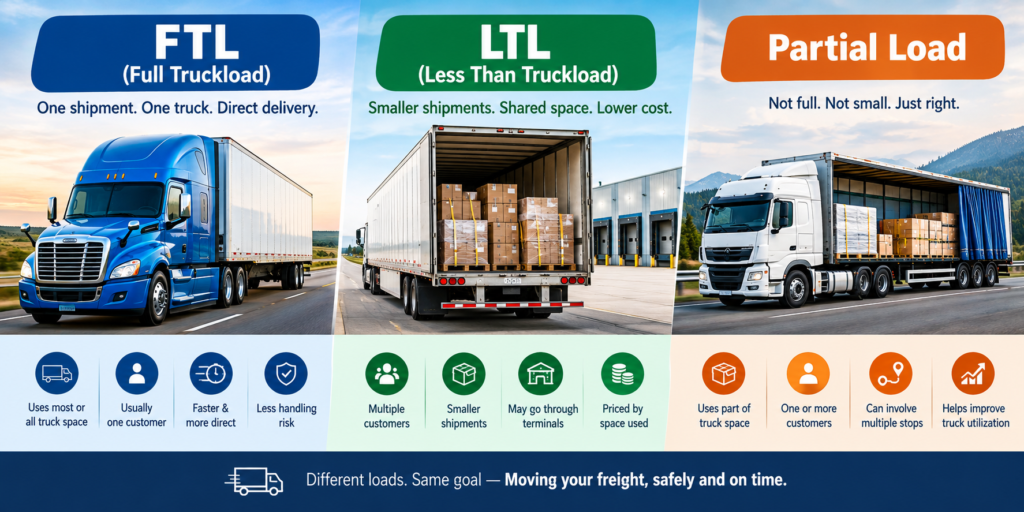
The trucking industry plays an important role in moving goods across the United States. From food and clothing to furniture and industrial equipment, businesses depend on trucks to transport products from one location to another. But how do companies find the right trucks to move their goods? This is where freight brokers play an important role.
Freight brokers connect businesses that need to ship goods with trucking companies that have available trucks. They help arrange transportation, negotiate freight rates, coordinate shipments, and communicate with both parties throughout the process.
Understanding how freight brokers work is also useful for people who want to build a career in truck dispatching or freight brokerage. In this guide, we will explain the freight brokerage process in simple words.
What Is a Freight Broker?
A freight broker is a person or company that connects shippers with carriers.
A shipper is a business that needs to transport goods, while a carrier is a trucking company that physically moves those goods. A freight broker helps both sides find a suitable transportation arrangement.
For example, imagine a furniture company in Texas needs to send a shipment to California. The company may not have its own trucks or an established relationship with a suitable carrier. It can contact a freight broker to arrange transportation.
The broker finds an appropriate trucking company, negotiates the rate, coordinates the shipment, and keeps both parties informed.
Freight brokers generally do not transport the goods themselves. Instead, they arrange transportation through authorized carriers.
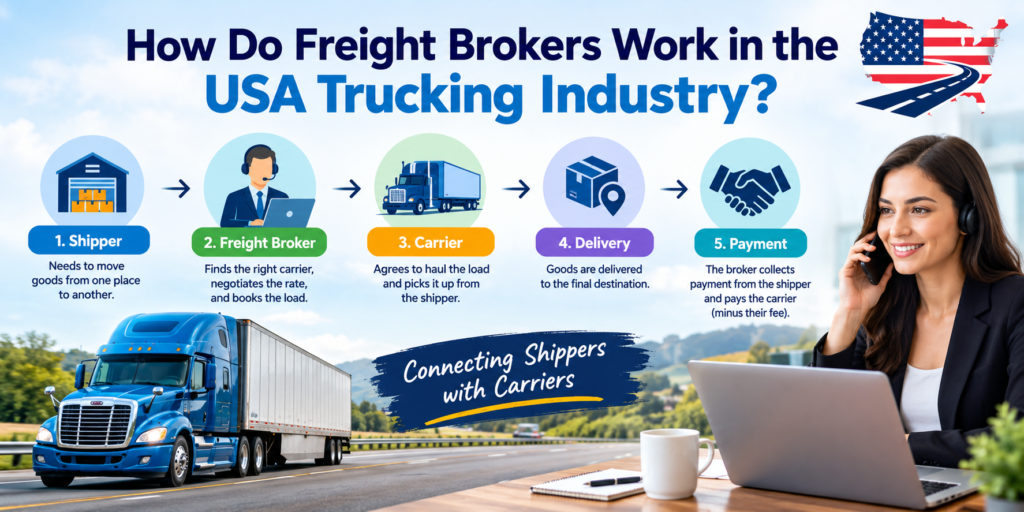
How Do Freight Brokers Work Step by Step?
Freight brokerage involves several steps, from receiving a shipping request to confirming that the shipment has been delivered.
1. A Shipper Needs to Move Freight
The process begins when a manufacturer, wholesaler, retailer, or another business needs to transport goods.
The shipper provides important details, such as:
- Pickup and delivery locations
- Type of goods being transported
- Shipment weight and dimensions
- Pickup and delivery dates
- Special equipment or handling requirements
The freight broker uses this information to understand the shipment’s transportation needs.
2. The Freight Broker Finds a Suitable Carrier
After receiving the shipment details, the broker searches for a trucking company that can handle the load.
Brokers may find carriers through load boards, existing carrier networks, business relationships, and direct communication.
They consider factors such as truck availability, equipment type, location, delivery schedule, and carrier qualifications.
For example, refrigerated goods may require a reefer trailer, while standard dry freight may be transported using a dry van.
The broker must find a carrier that meets the shipment’s requirements.
3. The Broker Negotiates the Freight Rate
Freight rates are an important part of the brokerage process.
The broker discusses the transportation price with the shipper and the carrier. The final rate can depend on distance, fuel costs, equipment requirements, market demand, shipment urgency, and available truck capacity.
For example, a broker might agree with a shipper on a transportation charge of $2,500 and negotiate a carrier payment of $2,200.
The difference is $300 before operating expenses and other applicable costs.
This difference is often called the gross margin, not net profit. The broker still needs to cover business expenses.
4. The Broker Confirms the Shipment
Once the rate and other details are agreed upon, the broker confirms the transportation arrangement.
A common document used at this stage is the rate confirmation. It outlines the agreed rate and important shipment details, such as pickup and delivery information, appointment times, and special instructions.
The broker also checks that the relevant carrier and driver understand the requirements.
Clear communication helps prevent confusion during pickup and delivery.
5. The Carrier Picks Up the Freight
The carrier sends a suitable truck and driver to the pickup location.
The shipper loads the goods, and the required shipping paperwork is completed. One common document is the Bill of Lading (BOL), which records key details about the shipment.
The broker may communicate with the carrier to confirm that the truck has arrived, the freight has been loaded, and the shipment is moving according to schedule.
6. The Broker Tracks the Shipment
After pickup, the broker helps monitor the shipment’s progress.
This may involve communicating with the driver or carrier, checking tracking systems, updating the shipper, and managing unexpected delays.
For example, if traffic, bad weather, or a mechanical problem affects the delivery schedule, the broker may coordinate with the carrier and notify the shipper.
Regular updates help businesses plan their receiving schedules and manage customer expectations.
7. The Freight Is Delivered
When the truck reaches its destination, the receiver accepts the shipment.
The carrier may provide a Proof of Delivery (POD), which confirms that the goods were delivered. Any shortages, damage, or delivery exceptions should be documented and communicated to the appropriate parties.
The broker checks the required paperwork and helps resolve outstanding issues.
8. Paperwork and Payment Are Completed
After delivery, the carrier submits the required documents and invoice according to the agreed payment process.
The broker processes the paperwork and pays the carrier under the agreed terms. The broker also collects payment from the shipper according to their contract.
Payment arrangements vary by company and agreement, so brokers need to manage invoices, documentation, and cash flow carefully.
How Do Freight Brokers Make Money?
Freight brokers usually earn money from the difference between the amount charged to the shipper and the amount paid to the carrier.
Consider this simplified example:
| Description | Amount |
|---|---|
| Amount charged to the shipper | $2,500 |
| Amount paid to the carrier | $2,200 |
| Gross margin | $300 |
In this example, the gross margin is $300.
However, this is not necessarily the broker’s final profit. Expenses such as employee salaries, software subscriptions, insurance, office costs, and other operating expenses must also be considered.
Freight rates and margins can vary significantly depending on market conditions, shipment type, route, and business relationships.
Tools Used by Freight Brokers in the USA
Technology helps freight brokers manage multiple shipments, find carriers, and keep transportation operations organized.
Common tools include:
1. Load boards: Platforms used to find available freight or trucks and connect with potential transportation partners.
2. Transportation Management Systems (TMS): Software used to organize loads, shipment information, carrier details, and operational workflows.
3. Email and communication tools: Used for rate negotiations, booking confirmations, shipment updates, and documentation.
4. Tracking systems: Help brokers monitor shipment progress and communicate estimated arrival times.
5. Digital documents and invoicing tools: Help manage rate confirmations, Bills of Lading, Proofs of Delivery, and invoices.
Learning how these tools work can help beginners understand real-world freight operations.
Freight Broker vs. Truck Dispatcher
Freight brokers and truck dispatchers work closely with the trucking industry, but their responsibilities are different.
| Feature | Freight Broker | Truck Dispatcher |
|---|---|---|
| Main role | Connects shippers with carriers | Coordinates loads and operations for a carrier or trucking business |
| Primary relationship | Works with shippers and carriers | Works on behalf of a carrier or trucking business |
| Load booking | Arranges transportation between shippers and carriers | Helps secure and manage loads for the carrier |
| Rate negotiation | Negotiates transportation rates with shippers and carriers | May negotiate load rates on behalf of the carrier |
| Shipment tracking | Coordinates updates between the parties | Monitors assigned loads and communicates with drivers |
| Main objective | Arrange transportation and manage customer and carrier relationships | Help the carrier manage loads, drivers, schedules, and operations |
The two roles can overlap in communication and shipment coordination, but their business responsibilities are different.
What Skills Does a Freight Broker Need?
A freight broker needs a combination of communication, business, and organizational skills.
Important skills include:
- Communication: Speaking professionally with shippers, carriers, and other business contacts.
- Negotiation: Discussing rates and transportation terms.
- Problem-solving: Managing delays, missed appointments, and shipment issues.
- Organization: Keeping load details, documents, and schedules accurate.
- Technology skills: Using load boards, spreadsheets, TMS platforms, and digital communication tools.
- Industry knowledge: Understanding freight types, equipment, routes, carrier requirements, and shipping documents.
Practical experience helps beginners understand how these skills are used in daily operations.
What Are the Requirements to Become a Freight Broker in the USA?
Operating as a freight broker in the United States involves regulatory requirements, not just finding loads and negotiating rates.
In general, a person or business arranging interstate transportation as a property broker must meet applicable Federal Motor Carrier Safety Administration (FMCSA) requirements. These generally include broker operating authority, a $75,000 surety bond or qualifying trust fund, and a process agent filing.
The exact requirements depend on the business activity and applicable regulations. Anyone planning to start a brokerage should verify the current rules directly with the FMCSA and obtain appropriate professional guidance when needed.
People who want to work in freight brokerage as employees should also understand the difference between working for an established brokerage and operating their own brokerage business.
How Can Beginners Learn Freight Brokerage and Truck Dispatching?
Beginners can start by learning the basic terminology used in the USA trucking industry. Understanding shippers, carriers, freight brokers, load boards, rate confirmations, Bills of Lading, and Proofs of Delivery provides a strong foundation.
The next step is to practise common workflows, including searching for loads, understanding equipment requirements, communicating professionally, comparing rates, and tracking shipments.
Truck dispatch training can help students learn carrier-side operations and understand how dispatchers communicate with freight brokers during load booking and delivery coordination.
At TrukyIQ, students can explore practical truck dispatching concepts, freight communication, load booking, route planning, and the tools used in trucking operations. This knowledge can help beginners understand how dispatchers and freight brokers work together in the USA and Canadian logistics industries.
Freight brokers play an important role in the USA trucking industry by connecting shippers with suitable carriers. Their work includes finding transportation capacity, negotiating rates, confirming shipments, tracking deliveries, managing documents, and coordinating payments.
For beginners, understanding the freight brokerage process is a useful step toward learning the wider trucking and logistics industry. Whether you want to explore freight brokerage or become a truck dispatcher, learning the roles, tools, and communication processes involved in moving freight can help you build a solid foundation.
Want to understand real-world trucking operations? Explore TrukyIQ’s truck dispatch training to learn about load booking, freight broker communication, and practical dispatching workflows.
For course information, call +91-7049490210.