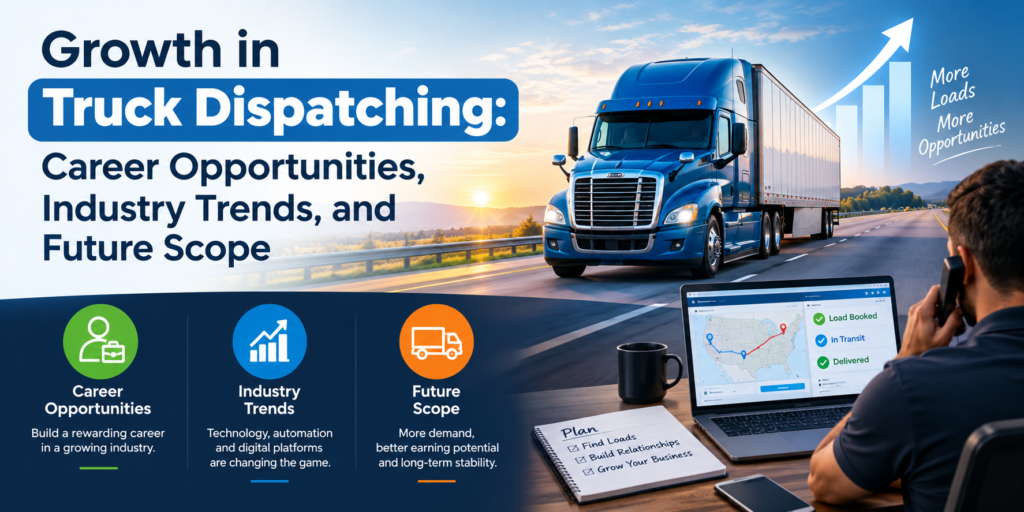
The trucking industry plays an important role in the US economy. Almost every business depends on trucks to move goods from one place to another. From food and clothing to electronics and industrial products, trucks help keep businesses running.
As the transportation industry grows and logistics operations become more advanced, truck dispatching is becoming an important part of the trucking business. Truck dispatchers help manage loads, communicate with drivers, coordinate deliveries, and keep daily operations running smoothly.
For people looking for a career in logistics, truck dispatching offers an opportunity to learn a practical skill and work with trucking companies, including through remote jobs.
What Is Truck Dispatching?
Truck dispatching is the process of managing trucks, drivers, loads, and delivery schedules. A truck dispatcher works with drivers and brokers to arrange freight transportation and ensure that loads are delivered on time.
A truck dispatcher typically handles:
- Finding suitable loads for available trucks
- Communicating with freight brokers and drivers
- Negotiating load rates when appropriate
- Planning routes and delivery schedules
- Tracking shipments and updating delivery status
- Managing paperwork, including rate confirmations and proof of delivery
- Handling delays and other transportation problems
A good dispatcher helps a trucking company save time, reduce empty miles, and manage its daily operations more efficiently.
Why Is the Truck Dispatching Industry Growing?
Several factors are creating opportunities in truck dispatching.
1. Growing Demand for Freight Transportation
Businesses need reliable transportation to move products between warehouses, distribution centres, stores, and customers. The growth of e-commerce and supply chains continues to create demand for freight services.
Every shipment requires proper planning and coordination. Truck dispatchers help connect available trucks with suitable loads and keep shipments moving.
2. Increasing Number of Trucking Businesses
Many independent truck owners and small trucking companies need help managing their daily operations. Drivers may spend most of their time on the road, leaving limited time to search for loads, negotiate rates, and manage paperwork.
A skilled dispatcher can help these businesses manage their workload and communicate more effectively with brokers and customers.
3. Technology Is Making Dispatching Easier
Modern dispatching uses online load boards, GPS tracking, transportation management systems, and digital paperwork.
These tools help dispatchers find loads, track trucks, organise schedules, and share updates more efficiently. Learning how to use these systems can improve a dispatcher’s productivity and career opportunities.
4. Opportunities for Remote Work
One reason truck dispatching attracts people outside the United States is that many dispatching tasks can be performed online.
A dispatcher based in India, for example, may be able to support a US trucking company remotely by searching for loads, coordinating with brokers, updating shipment information, and managing documents.
However, remote opportunities depend on the employer, work experience, communication skills, working hours, and the company’s operating arrangements.
Can Truck Dispatching Be a Good Career in India?
Yes, truck dispatching can be a career option for people in India who want to work in logistics and transportation, particularly with companies serving the US trucking market.
Punjab has a strong connection with the trucking industry in North America. Many Punjabi families have connections to transportation businesses in the United States and Canada. This can create interest in learning about truck dispatching and exploring related employment opportunities.
People interested in this field should understand that learning truck dispatching does not guarantee a job. Employers may look for practical knowledge, English communication skills, computer skills, and the ability to work according to US business hours.
What Skills Are Required to Become a Truck Dispatcher?
You do not necessarily need a technical degree to start learning truck dispatching. However, you need to develop several important skills.
English communication: Dispatchers regularly communicate with drivers, freight brokers, and customers.
Load booking: You should understand how to search for available freight, compare loads, and select suitable opportunities for a truck.
Rate negotiation: Knowing how to discuss rates professionally can help protect a carrier’s profitability.
Basic computer skills: You should be comfortable using email, spreadsheets, online platforms, and digital documents.
Time management: Dispatchers must coordinate pickups, deliveries, appointments, and follow-ups.
Problem-solving: Delays, cancellations, traffic, and mechanical issues can occur. A dispatcher needs to communicate clearly and help find practical solutions.
How Much Can a Truck Dispatcher Earn?
Truck dispatcher earnings vary depending on experience, employer, location, responsibilities, and the payment structure.
In India, someone working for a logistics company may receive a fixed salary, while an independent dispatcher may earn through service fees or an agreed commission. US-based opportunities can have different compensation structures.
There is no single income figure that applies to every dispatcher. Before accepting a job or starting an independent dispatching business, understand the payment terms, expected workload, working hours, and responsibilities.
How Can You Start a Career in Truck Dispatching?
If you are new to the industry, follow these steps to build your knowledge.
- Understand the US trucking industry. Learn about carriers, owner-operators, freight brokers, shippers, and different types of trucks.
- Learn the dispatching process. Understand load searching, booking, rate confirmations, pickup and delivery appointments, and shipment tracking.
- Practise with real-world examples. Learn how to compare loads, estimate route distances, communicate with brokers, and maintain dispatch records.
- Improve your communication skills. Practise professional phone calls, emails, and conversations related to load booking.
- Learn common dispatching tools. Become familiar with load boards, spreadsheets, tracking systems, and transportation management software.
- Apply for suitable opportunities. Look for entry-level dispatcher roles, logistics support positions, or supervised training opportunities.
- Build experience gradually. Focus on accuracy, professional communication, and reliable service before taking on more responsibility.
Practical training can help beginners understand how dispatching works in everyday situations. Choose a course that includes hands-on exercises rather than only theoretical lessons.
What Is the Future of Truck Dispatching?
The future of truck dispatching is likely to involve more technology, better shipment visibility, and greater use of automation.
Artificial intelligence and automated systems can help with tasks such as route planning, document processing, and shipment updates. However, human dispatchers remain valuable when communication, negotiation, unexpected problems, and customer service require judgment.
Dispatchers who understand both the trucking business and modern digital tools may be better prepared to adapt to industry changes.
The strongest career opportunities will depend on freight demand, business conditions, technology, and the ability to provide reliable service.
Is Truck Dispatching a Good Business Opportunity?
Truck dispatching can also be a business opportunity for people who understand the transportation industry.
An independent dispatcher may work with owner-operators or small trucking companies and provide services such as load searching, broker communication, schedule coordination, and paperwork management.
Before starting, it is important to understand the legal and contractual requirements of the business. In the United States, the distinction between dispatching as a carrier’s agent and operating as a freight broker matters. Certain activities may require broker authority, depending on how the business operates.
New dispatchers should understand their responsibilities, use clear service agreements, and avoid promising guaranteed loads or profits.
Frequently Asked Questions About Truck Dispatching
Is truck dispatching a growing career?
Truck dispatching continues to be an important function in freight transportation. Career opportunities depend on freight market conditions, employer demand, technology, and the dispatcher’s skills.
Can I learn truck dispatching without experience?
Yes. Beginners can learn the basics through structured training, practical exercises, and supervised work. Real-world experience helps develop confidence and decision-making skills.
Can I work as a US truck dispatcher from India?
Yes, some companies hire remote dispatchers or logistics support staff in India. You should have suitable communication skills, knowledge of US trucking operations, and the ability to work the required hours.
Do I need a degree to become a truck dispatcher?
A specific degree is not always required. Employers may focus on practical knowledge, communication skills, computer proficiency, and relevant experience.
Will AI replace truck dispatchers?
AI may automate some routine tasks, but dispatchers can still add value through negotiation, relationship management, exception handling, and decision-making. Learning new tools can help dispatchers adapt.
How long does it take to learn truck dispatching?
The time required depends on your background, training, and practice. You can learn basic concepts in a short period, but becoming confident with load booking, rate negotiation, and real-world problems takes continued practice.
Conclusion
Truck dispatching offers a practical way to enter the logistics and transportation industry. Growing freight needs, digital tools, and remote-work arrangements create opportunities for people who develop the right skills.
For beginners in India, especially those interested in working with US trucking companies, the first step is to understand the industry, learn the dispatching process, improve communication skills, and gain practical experience.
The key to long-term growth in truck dispatching is not just finding loads. It is helping trucking businesses operate efficiently, communicate professionally, and build reliable working relationships.